
Annotated
Bibliography
the material and visual depictions of cinematic cities and their interpretations:
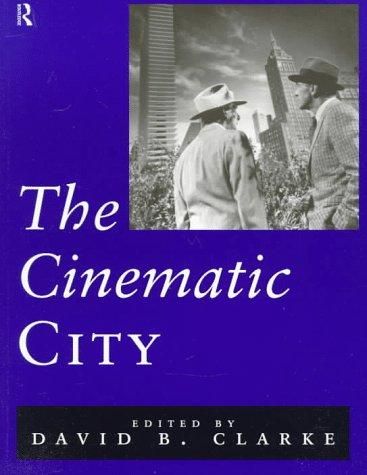
Clarke, David, ed. The Cinematic City. New York: Routledge, 1997.
As noted in the literature review page, this volume serves as the first publication that brings together a diverse group of scholar to address the topic of the “cinematic city.” Although all eleven essays in the volume great sources for understanding the cinematic city in specific contexts and genres, especially when read in conjunction with one another, the bibliographic entries of the selected chapters below will highlight the essays most relevant to the concept of urban materiality, otherness, and the ambivalence attitude of modern life in the metropolis.
- McArthur, Collin. “Chinese Boxes and Russian Dolls.” In The Cinematic City. New York: Routledge, 1997.
- Bruno, Giuliana. “City Views: The Voyage of Film Images.” In The Cinematic City. New York: Routledge, 1997.
Chow, Rey. “Film and cultural identity.” In The Oxford Guide to Film Studies. New York: Oxford University Press, 1998.
In this essay, critic Rey Chow offers a sweeping claim about film and cultural identity. Although the basis of which claim may be prone to criticism we may adapt Chow’s flexible interpretation of why even culturally specific films can gain “transcultural” appeal to many depictions of cinematic cities deemed ‘foreign’ to most of a given film’s intended audience. While the critic does not deny the many impositions that “Western, American, or other types of ideology” have placed on the rest of the world’s film industries, Chow suggests that the widespread appeal of “fairy-tale romance, sex, kitsch, and violence of Hollywood” and “the greatly popular slapstick humour and action films of Jackie Chan from Hong Kong” create modes of fascination that transcend culture. “It seems to me equally noteworthy that the world-wide appeal of many such films has something to do, rather, with their not being bound by well-defined identities,” Chow writes, “so that it is their specifically filmic, indeed phantasmagoric, significations of masculinism, moral righteousness, love, loyalty, family, and horror that speak to audiences across the globe regardless of their own languages and culture.”
MaGee, Chris, ed.. World Film Locations: Tokyo. Chicago: Intellect Books, The University of Chicago Press, 2006.
This volume provides a great companion to the case study on this site which considers the film Lost In Translation. In fact, as part of the World Film Locations series, the book is one of many works which consider a number of cities that have repeatedly appeared in movies thus contributing to the growing scholarship on the cinematic city. This volume examines 45 scenes set in Tokyo and presents the following statement which describes what the city means to “western film-makers”: “Tokyo represents an interesting dichotomy of centuries-old traditions and cutting edge futurism, a world alien yet familiar where travellers are not only forced to transition from one culture to another, but often find themselves transitioning on a deeper, personal level as well.” The statement suggests that confronting and transitioning oneself between one culture to the culture of Tokyo precedes a kind of inevitable personal transition. This interpretation alludes to common assumption that simply being in a different culture–especially in a city full of paradoxes and seemingly impossible dichotomies–automatically posits personal transformation.
Mitchell, Neil, ed.. World Film Locations: London. Chicago: Intellect Books, The University of Chicago Press, 2011.
As part of the same series as the volume above. This book about London and the many scenes filmed within it limits contains an essay that addresses a hallmark of the modern city: advanced public transportation. Critic James Rose examines how many mundane work commutes have come to serve as perfect setting for extraordinary horror. With a subtle allusion to the theory of the everyday, the essay presents the “other” network of passageways, one often hidden away unseen, too, as a part of the cinematic city.
Also in this series:
Solomons, Gabriel, ed.. World Film Locations: Los Angeles. Chicago: Intellect Books, The University of Chicago Press, 2011.
This volume contains a particularly pertinent essay by Michael S. Duffy on European filmmakers’ relationships to and portrayals of Los Angeles and ‘modern’ American life.
Barber, Stephen. Projected Cities: Cinema and Urban Space. London: Reaktion Books, 2002.
In Projected Cities, Barber explore cinematic cities from its origin which began as early as the birth of the medium itself. With particular focus on European and Japanese cinemas and their affinities, Barber’s analyses address, in careful detail, physical urban textures, their visual impact, and their symbolic significance.
Park, Jane Chi Hyun. Yellow Future: Oriental Style in Hollywood Cinema. Minneapolis: University of Minnesota Press, 2010.
This volume explores futuristic, technologized visions of East Asia in Hollywood cinema since 1980s; visions that she believes are sustained by the conflation of East Asia with technology in a global context, which constitutes what Park terms an “oriental style” and defines as “the sometimes unsettling and often quite illuminating ways in which Asian tropes and themes occupy the background of Hollywood movies and how these tropes and themes implicitly structure the primary narratives and characters of these films.” In the book, the cinematic East Asian city is given a chapter whereby, through a reading of Blade Runner’s futuristic, polluted, and unfamiliarized Los Angeles, Park examines the oriental imagery that appears in the depiction of the city in relation to race, class, and gender.
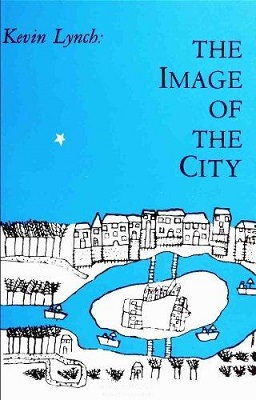
Lynch, Kevin. The Image of the City. Cambridge: MIT Press, 1960.
Kevin Lynch was an urban planner and theorist who wrote extensively about the significance of the mental map of a city in habitant and how the clarity of that image corresponds to the person’s experience of the city. Although Lynch does not address film directly in his work, his writings provide a detail understanding of how the material/physical affect the mental – a mechanism that might go unexplained under the heavily visual medium of film.
If interested in learning more about the physical and mental images of the city, see also:
De Certeau, Michel. “Walking in the City.” In The Practice of Everyday Life. Translated by Steven Rendall. Berkeley and Los Angeles: University of California Press, 1984.
understanding the condition of modern life in the metropolis:
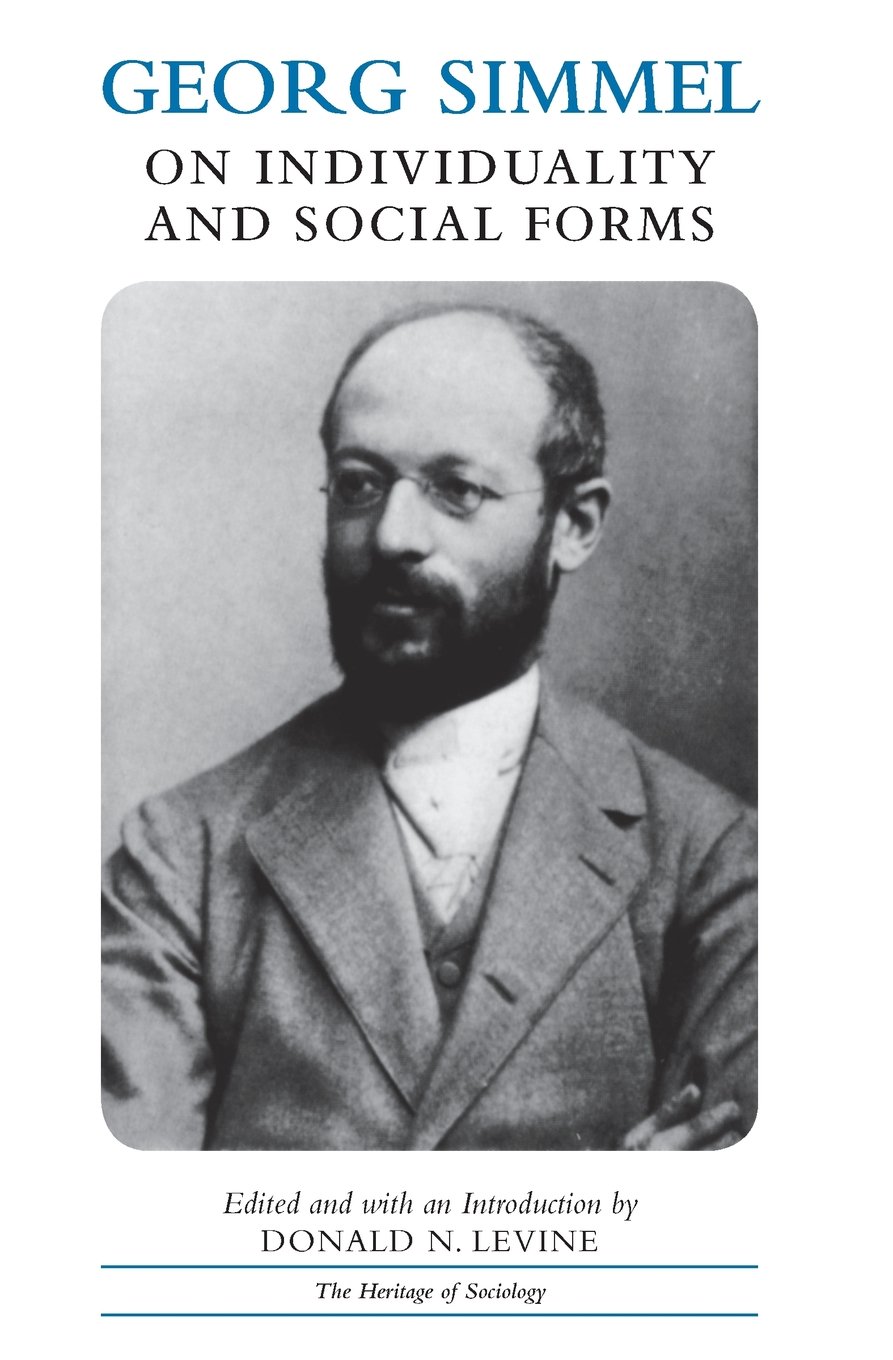
Simmel, Georg. "The Metropolis and Mental Life."
Translated by Edward A. Shils. In Georg Simmel: On Individuality and Social Forms, Selected Writings. Chicago: The University of Chicago Press, 1971. Originally published as "Die Grossladt und das Geistesleben, in Die Grosstadt. Jahrbuch der Gehe-Stiftung 9 (1903).
In this famous essay, sociologist Georg Simmel proposes that the conditions of the metropolitan city—its constant simulation, impressions, and ephemeral connections—cause urban occupants to develop a protective mental state. The blasé outlook is characterized by qualities of indifference, meaninglessness, reserve, distantiation, and deflection. Simmel suggests that such apathy is in itself a form of socialization that works to prevent over-stimulation and conflict.
Charney, Leo and Vanessa R. Schwartz, eds.. Cinema and the Invention of Modern Life. Los Angeles: University of Califormia Press, 1995.
This volume offers perspective on how film, from its early conception in late 19th-century, has played a role in shaping modern life in and out of the city and on and off of the screen. The chapters address aspects of modernity including hyperstimulation (as addressed by Simmel above), degeneration (per T.S. Eliot’s quintessentially modernist poem The Waste Land), shopping and consumer desire, and an increased attention on everyday life.
See also, the following chapters in this volume of Walter Benjamin's writings for relevant perspective about film as a medium and the nature of the modern city:
Benjamin, Walter. Illuminations.
Translated by Harry Zohn. New York: Schocken Books, 1968.
- "The Work of Art in the Age of Mechanical Reproduction"
- "On Some Motifs in Baudelaire"
other perspectives on the case study:
Kocak, Meral. “The Modern and Postmodern in Sofia Coppola’s Lost in Translation.” Body Text 4, 1, 25-38 (2015-6).
As well as putting the film in conversation with ideas found in Simmel’s work, Kocak summarizes and engages with the concept of “liquid love” and “liquid modernity” proposed by sociologist and philosopher Zygmunt Bauman, presenting Coppola’s portrayals of the main characters’ unconsummated romance as a typical form of postmodern relationship.
King, Homay. “Lost in Translation.” Film Quaterly 59, 1, 45-48 (2005).
In this article published two years after the film’s release professor of Film Studies Homay King examines the difference in reception of Coppola’s film by American and Japanese audience. King calls out the film’s trafficking in (negative) stereotypes but argues that Lost in Translation does depart from Hollywood’s tradition of Orientalism “by indicating that its Tokyo is actually a fantasy version projected by Americans abroad.”
For a concise exploration of Said’s Orientalism and cinema see:
Sim, Gerald. “Said’s Marxism: Orientalism’s relationship to film studies and race.” Discourse 34, 2-3, 240 (2012).
Chen, Yu. “A Costume Analysis of the Film ‘Lost in Translation’ (Coppola, 2003).” Textile 11, 2, 231-6 (2021).
Putting material culture analysis at the center of the work, Chen’s article suggests that clothing in the film is also a means for translation, “both in the sense of transplantation or transference–as in Latin, translatio, referring to the ceremonial relocation of relics and (holy) persons, and thus to travel–and in the sense of transformation.” Chen’s engagement with the concept of otherness appears in her analysis of the main character, Charlotte, whereby Chen proposes that the pink wig Charlotte wears on her night out indicates a gesture of the character “becoming other to herself” and “going forth to meet Japan.”
Murphy, Amy. “Traces of the Flâneuse: From Roman Holiday to Lost In Translation.” Journal of Architectural Education 60, 1 33-42 (2006).
In this article Murphy explores female protagonists’ navigation of the urban landscape. Murphy, much like the present project, engages with 19th-century notions about cities and the figures that occupy them. In particular, Murphy examines the concept of the autonomous, mobile, “social body for which the capitalist industrial city was structured,” arguing that the figure of the flâneur emerges as female characters in the films examined and thus the figure serves as “a convenient and powerful mechanism to reexamine each generation’s sense of gender classification and its transgressions, ambiguities, and ideological difficulties.”
Dwyer, Tessa. “Universally speaking: Lost in Translation and polyglot cinema.” Linguistica Antverpiensia, New Series – Themes in Translation Studies 4, 295-310 (2005).
Linguistic not material/visual/physical depictions of difference lies at the center of this study which explores the trends in translation and inclusions of subtitle in American cinema with a close examination of Lost In Translation serving as a case study that helps address the "messy and mundane realities of translation, thereby exposing the industry's more usual predilection to ignore or disavow the complexities of language difference."
“Sofia Coppola interview on ‘Lost in Translation’ (2003),” Youtube Video, Feb 20, 2017, https://www.youtube.com/watch?v=nsf7cMjPa2I&ab_channel=ManufacturingIntellect. (original interview date unknown).
In this interview, Coppola spoke about her attraction to subtle moments of connections, of her circle of friends with whom she works, of her dad and the process of making the film in 27 days. When asked what attracted her to Tokyo, Coppola cited spending time there in her 20s and cited the city's being home to both the old and the new. "It feels like a very exciting modern city and so into style, Coppola said, "and the extremes of so modern and the ancient temple next to the neon craziness that’s like being on another planet so.”